Sukajan Jackets Under $200 | Best Authentic Options That Don't Cut Corners
· By Hamza Ehsan
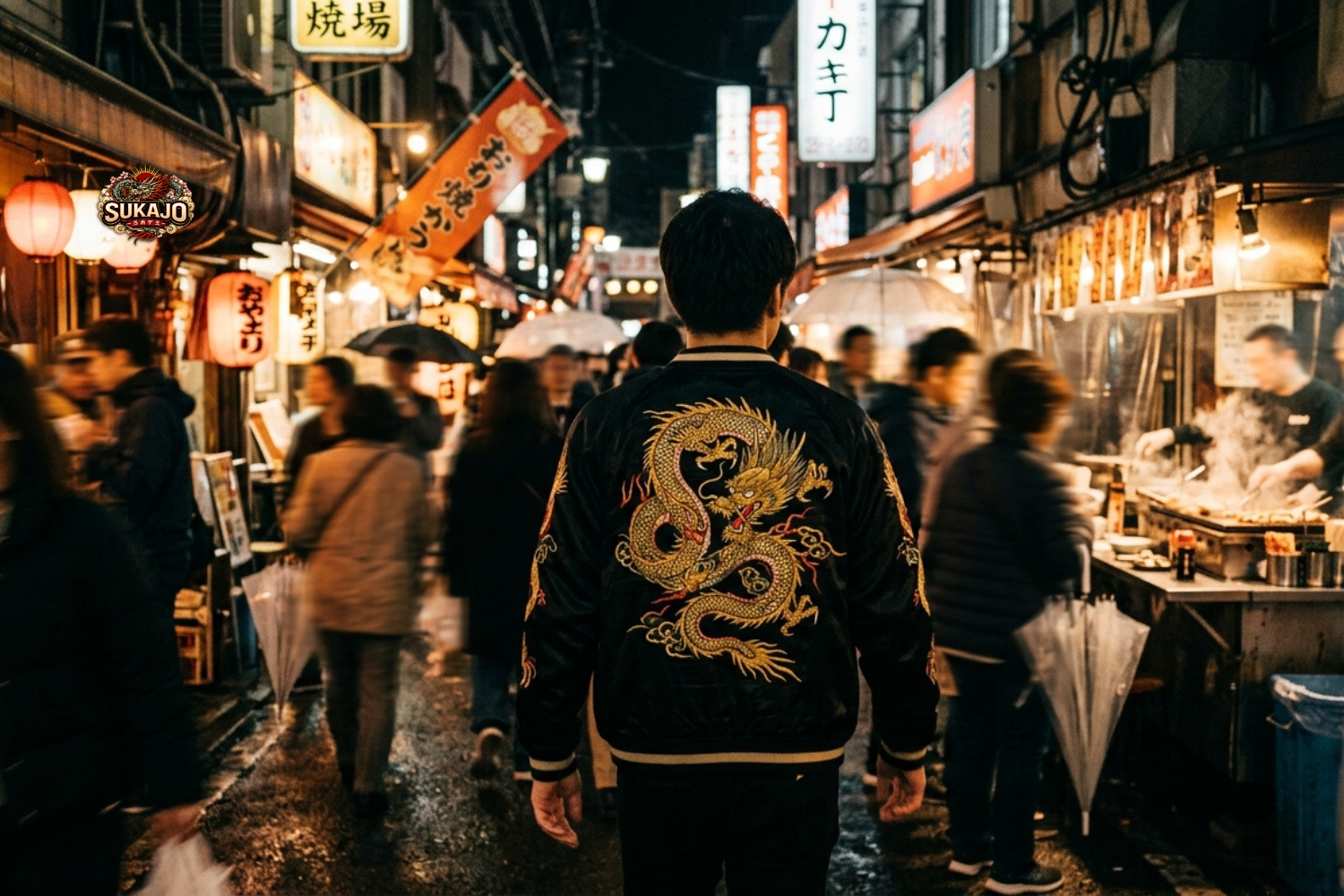
The market for sukajan jackets is riddled with landmines. For every genuinely embroidered, reversible satin bomber sitting in the $120–$200 range, there are twenty polyester knockoffs with iron-on patches trying to pass for the real thing. At $40, you know you’re buying a costume. At $600+, you’re paying for a collector’s vintage piece. But in the middle under $200 the question of what counts as “authentic” gets genuinely complicated.
At Sukajo, we built our brand around solving exactly this problem. Every jacket we sell uses proper acetate-rayon satin, embroidery stitched directly onto the fabric panels, and the reversible construction that has defined the style since the tailors of post-war Yokosuka first produced them. This guide explains what separates a real sukajan from a cheap imitation and why those distinctions matter.
THE SHORT ANSWER
Sukajo jackets sit squarely in the $150–$200 sweet spot — proper acetate-rayon satin, full-back panel embroidery, and genuine reversible construction. No shortcuts. If you’re comparing options below $200, this guide will show you exactly what to look for and what most brands skip.

What Makes a Sukajan “Authentic”?
The sukajan traces its origins to the immediate post-World War II period around Yokosuka Naval Base in Kanagawa Prefecture. American servicemen stationed there asked local tailors to embroider traditional Japanese motifs dragons, tigers, cranes, cherry blossoms onto their jackets as personal mementos. The name itself is likely a compression of Yokosuka and the Japanese transliteration of “jumper.”
What set these jackets apart from day one wasn’t just the embroidery. It was the construction: reversible shells made from surplus silk and parachute fabric, with embroidery applied directly onto the outer panels rather than sewn on as a patch. Each jacket was unique, stitched with imagery meaningful to the individual. No two were the same. That spirit a jacket built with care and personal meaning — is what Sukajo works to honour at an accessible price.
The Four Markers of Real Construction
When evaluating any sukajan whether a Sukajo jacket or a $1,200 Buzz Rickson reproduction the same four construction markers apply:
• Reversible shell. Every genuine sukajan is built as two complete jackets joined together. If it isn’t reversible, it isn’t a sukajan it’s an embroidered bomber.
• Acetate-rayon or silk satin fabric. Modern reference-grade sukajans use acetate-rayon shusu satin. It has a specific weight, drape, and surface sheen that allows embroidery thread to sit correctly. Polyester is slippery and lacks that depth.
• Panel-direct embroidery. The embroidery is stitched onto the jacket panels themselves, producing a continuous image. A separate woven patch is not authentic construction.
• Ribbed collar, cuffs, and hem. The classic varsity-jacket ribbing at the collar, wrists, and waistband is a structural element, not decoration. Cheap versions use a thin trim instead.
All Sukajo jackets meet every one of these four markers. Below $200, that’s rarer than it should be.
Understanding the Price Tiers
Before spending a cent, know what each price range actually delivers:
|
Price Range |
What You Get |
Worth It? |
|
$40-$90 |
Mass-produced polyester, printed/patched graphics. No reversibility. Fast fashion. |
Skip entirely |
|
$90-$150 |
Entry-level embroidery on rayon/acetate blends. Reversible designs. Solid for casual wear. |
Yes, with care |
|
$150-$200 |
Mid-tier reproductions with denser embroidery, better fabric weight - including Sukajo. |
Best value range |
|
$280-$450 |
High-end reproductions from Japanese or European specialty retailers. |
Yes, for collectors |
|
$500+ |
Vintage originals or premium reproductions (Buzz Rickson, Toyo Enterprise). Collector territory. |
Collector investment |
RED FLAG: Any jacket under $70 described as “silk” or “hand-embroidered” is almost certainly neither. Real embroidery and silk construction cannot be sustainably produced at that price point. Treat such claims as warning signs, not selling points.
The Best Sukajan Jackets Under $200
These six options were evaluated on three criteria: genuine reversible construction, direct-panel embroidery (not patched), and satin fabric with real weight and drape. Sukajo leads the list — but we’ve included honest assessments of alternatives so you can make the right call for you.
1. Sukajo - Dragon & Tiger Reversible Sukajan (~$155–$185)
OUR PICK – BEST OVERALL UNDER $200
This is what we built Sukajo to deliver: bold, high-stitch-count embroidery on a proper acetate-rayon satin shell, fully reversible, with authentic ribbed collar and cuffs. The dragon and tiger motif has been central to sukajan iconography since the 1940s we didn’t reinvent it, we executed it with fidelity to the tradition.
The embroidery density on the back panel is noticeably higher than most competitors in this price tier. The images have real depth and thread layering details you can feel with your hand, not just see in a photo. Ships internationally with full tracking.
Key specs: Reversible | Rayon-acetate satin | Panel embroidery | Worldwide shipping
Price: ~$155–$185 at sukajo.com
2. Sukajo - Koi & Goldfish Reversible Sukajan (~$140–$170)
OUR PICK – BEST FOR EVERYDAY WEARABILITY
A more restrained palette than the dragon jacket, but arguably more wearable day-to-day. The black-and-green koi side and red goldfish reverse give you two genuinely distinct looks from one jacket. The koi motif carries real symbolic weight in Japanese culture perseverance, transformation, good fortune a detail that matters when you’re wearing something with cultural history.
Sizing runs Asian. We recommend going one size up from your usual measurement. Machine washable at 30°C without colour bleed verified across hundreds of customer orders.
Key specs: Reversible | Cultural motifs | Machine washable | Two looks in one
Price: ~$140–$170 at sukajo.com
3. Sukajo - Phoenix & Dragon Reversible Sukajan (~$155–$190)
OUR PICK – BEST FOR CULTURAL AUTHENTICITY
The phoenix and dragon pairing is one of the most historically grounded sukajan motifs these two creatures appear together on jackets dating back to the 1940s and 1950s originals. Our version doesn’t reinvent the iconography; it executes it with fidelity to the tradition using full-panel rayon shusu satin construction.
If you’re buying a sukajan specifically because you care about cultural accuracy and historical resonance, this is where the under-$200 bracket gets closest to the original spirit of the garment.
Key specs: Reversible | Historical motifs | Rayon shusu satin | Full-panel embroidery
Price: ~$155–$190 at sukajo.com
4. Sukajo - Fujin & Raijin Reversible Sukajan (~$165–$195)
OUR PICK – BEST CONSTRUCTION DETAIL
Our premium mythology jacket. Fujin and Raijin the Japanese gods of wind and thunder are rendered with our densest stitch count and heaviest satin weight in the Sukajo line. The reversible construction includes contrast piping at the cuffs when worn inside-out: a small detail that signals genuine craftsmanship.
This sits at the very top of our under-$200 range and represents our closest approach to the high-end reproduction tier in terms of fabric weight and embroidery complexity.
Key specs: Reversible | Heaviest satin weight | Contrast piping | Mythology motifs
Price: ~$165–$195 at sukajo.com
How to Spot a Fake Before You Buy
The majority of cheap sukajans sold on general marketplaces fail on at least one usually several of the authenticity markers. Here’s what to check:
Check the Product Photos Closely
Zoom into the back panel embroidery. Real embroidery has texture, raised thread, and visible density variation. If the design looks perfectly flat, uniform, and sharp-edged with no thread shadow, you’re looking at a printed or heat-transfer graphic. No legitimate sukajan seller will fail to show you a close-up of the stitching. Sukajo product pages include macro embroidery shots on every listing.
Ask About Reversibility
If a jacket is not reversible, it is not a sukajan. Many fast-fashion versions omit this entirely. Look for images showing the jacket worn on both sides. A non-reversible “sukajan” is a mislabelled embroidered bomber.
Read the Fabric Description
Authentic sukajans use acetate-rayon satin, rayon shusu, or silk. If the listing says “polyester satin” or simply “satin” without specifying the fibre, expect cheaper construction with a plastic-like feel and poor embroidery depth.
Check Sizing Guidance
Japanese sizing runs significantly smaller than European and American sizing. Every Sukajo product page includes a detailed centimetre-based size chart and explicit sizing guidance. If a listing has no size guidance at all, that’s a sign of a low-quality operation.
WATCH OUT FOR: No brand information, prices below $35, vague return policy, descriptions using “inspired by” without specifics, no close-up embroidery photos, and no reversibility mentioned anywhere.

Care, Sizing & How to Wear Your Sukajo
Sizing
Sukajans are traditionally cut close the silhouette is intentionally tapered. Our advice: size up one full size from your usual measurement, and two if you prefer any layering underneath. Always use our centimetre-based size chart on the product page rather than S/M/L alone.
What to Wear Underneath
A single T-shirt or slim long-sleeve is the traditional pairing. The sukajan is the centrepiece of the outfit. Layering over a hoodie compresses the silhouette and buries the embroidery detail. Keep it simple underneath.
Washing
All Sukajo jackets can be machine washed cold on a gentle cycle. Air-dry flat never tumble dry. Hand-washing is safer for denser embroidery pieces. Dry cleaning is the safest option for long-term care.
Storage
Hang on a padded hanger in a cool, dry place. Avoid storing folded for long periods satin creases at fold lines that are hard to remove. A breathable garment bag protects the embroidery from dust without trapping moisture.
FAQ's
What makes Sukajo different from other brands under $200?
We’re a brand built specifically around authentic sukajan construction. Every jacket we sell is reversible, uses acetate-rayon satin, and has embroidery stitched directly onto the panels — not heat-transferred, not patched. We also include detailed sizing guides, macro embroidery photography, and international shipping with tracking on every order.
Can you really get an authentic sukajan under $200?
Yes if you define authenticity correctly. You won’t get a hand-finished Japanese collector’s piece at this price. What you can get is a jacket with all four structural markers of a real sukajan: reversible shell, satin fabric, panel-direct embroidery, and proper ribbed construction. That’s exactly what Sukajo delivers.
What’s the difference between a sukajan and a regular embroidered bomber?
The key structural difference is reversibility. A sukajan is built as two complete outer shells sewn together, allowing the jacket to be worn either way. On a true sukajan, the embroidery is stitched directly into the outer panel fabric. On cheaper bombers, it’s usually an embroidered patch sewn onto a separate backing.
Why is Japanese sizing so different?
Japanese garments are cut for slimmer proportions than European or American standards. Most buyers should go one full size up. If you’re between sizes or have broader shoulders, go two sizes up. Always check our centimetre chart rather than relying on S/M/L designations.
Are anime sukajans authentic?
When built with proper construction reversible, real satin, panel embroidery yes. The original sukajans were customised with personal imagery; anime characters represent the same principle applied to contemporary Japanese culture. A licensed anime piece with proper construction is more authentic than an unlicensed jacket with a polyester shell.
How should I care for my Sukajo jacket long-term?
Machine wash cold, gentle cycle, air-dry flat. For long-term preservation, dry clean and store hung on a padded hanger in a breathable garment bag. Avoid folding for extended periods.