What is aSukajan?
Sukajan (スカジャン) — the Japanese embroidered souvenir jacket, short for “Yokosuka jumper” (横須賀ジャンパー). A satin bomber-style jacket covered in dragons, tigers, cranes and waves, stitched thread by thread.
Noun · Japanese · Pronounced “soo-kah-jahn”
A souvenir that became aclassic.
A sukajan is a satin jacket in the bomber tradition, decorated with large embroidered artwork, usually on the back, with smaller pieces on the chest and sleeves. It was born as a souvenir: something to take home from Japan that said I was there.
Today the word covers a whole family of jackets: reversible styles with a plain side, bomber and varsity silhouettes, cropped cuts, and modern pieces inspired by the originals. What ties them together is the craft: bold imagery, rich color and embroidery you can feel with your fingertips.
suka
from Yokosuka (横須賀), the naval port town
jan
from “jumper” (ジャンパー), Japanese for a jacket
スカジャン
“Yokosuka jumper”, also called a Japan jacket or souvenir jacket
01
It is a jacket
Bomber-style cut with ribbed collar, cuffs and hem, and a front zipper.
02
It is embroidery
The artwork is stitched, not printed. That is the whole point.
03
It is storytelling
Every motif carries meaning: strength, luck, protection, courage.
04
It is wearable art
A single jacket can become a piece you keep for years.
From the docks of Yokosuka to the world.
The sukajan grew out of one meeting point: Japanese craftsmen, American servicemen and a shared appetite for something bold.
1940s
The first souvenirs
After World War II, servicemen stationed around Yokosuka asked local tailors for keepsakes from Japan. Embroidered jackets, often made from reworked materials, were the answer.
1950s
The tourist jacket
Embroidery shops adapted kimono-inspired art and traditional motifs to bomber-style jackets. Dragons, tigers and maps of Japan became the signature look.
1960s–70s
Subculture staple
The jacket spread beyond the base towns and was adopted by youth and subcultures in Japan, where it gained its “suka” nickname.
1980s–2000s
Vintage and fashion
Collectors, designers and streetwear lovers rediscovered vintage pieces, and high-end brands began to reference the style.
Today
Global streetwear
Sukajan now sit at the crossroads of heritage craft and street style, worn worldwide and made new by custom work.
Note: sukajan history is passed down through shop lore and collectors, and exact dates and details vary by source. We describe it here in broad eras.
Anatomy of a sukajan.
Tap a point on the jacket to see what each part is, and what to look for when you buy.
Back panel
The canvas. A large panel of satin carries the main artwork, usually a dragon, tiger or landscape, stitched edge to edge.
What to look forRaised, dense stitching with crisp outlines and no gaps in the color.
Thread by thread.
The embroidery is what makes a sukajan a sukajan. Here is how a Sukajo piece is made and what the detail means.
- 14,000+
- stitches on a full back panel
- 3–5 hrs
- of embroidery time per piece
- 100%
- stitched, never printed
- 10–15
- working days, production and US delivery
 Koi scalesRaised satin stitch
 Dragon and peonyThread you can feel

Step 01
Design
Artwork is drawn and balanced for the back panel, then separated into thread colors.
Step 02
Digitize
Each shape is mapped into stitch direction, density and order.
Step 03
Embroider
The satin panel is stabilized in a hoop and stitched layer by layer.
Step 04
Finish
Loose threads are trimmed, the back is checked and the panel is pressed.
Step 05
Assemble
Panels are sewn with lining, ribbed trim and zipper, then inspected.
Four stitches you will see
Satin stitch
Tight parallel threads that give glossy, filled color. Used for dragon bodies and petals.
Fill stitch
Textured fill that covers larger areas like clouds and waves with depth.
Outline stitch
A bold border that defines the edge of each shape and keeps lines crisp.
Raised stitch
Padded layers beneath the thread lift details like eyes, scales and flames.
Every image means something.
Pick a quality you care about and see which motifs carry it.

Dragon
A symbol of wisdom, power and good fortune. The dragon is the most iconic sukajan motif.
Shop dragon →- Strength
- Wisdom
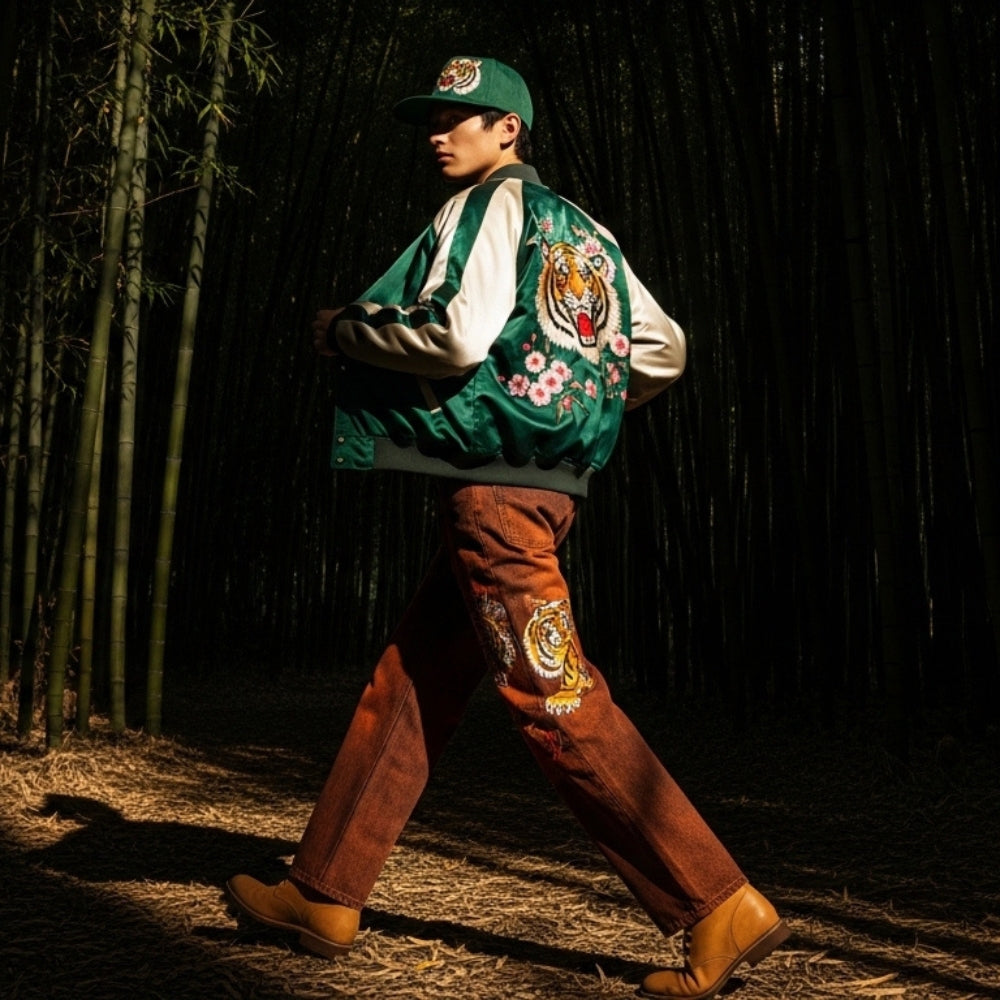
Tiger
Courage and protection. Often paired with the dragon as a pair of opposing forces.
Shop tiger →- Strength
- Protection

Koi
Perseverance and success. The koi swims upstream and becomes a dragon in legend.
Shop koi →- Luck
- Strength

Mount Fuji
Japan's sacred mountain: resilience, and a long, steady climb.
Shop Mount Fuji →- Strength
- Luck

Snake
Protection and renewal. Often found on vintage jackets and associated with good fortune.
Shop snake →- Protection
- Wisdom
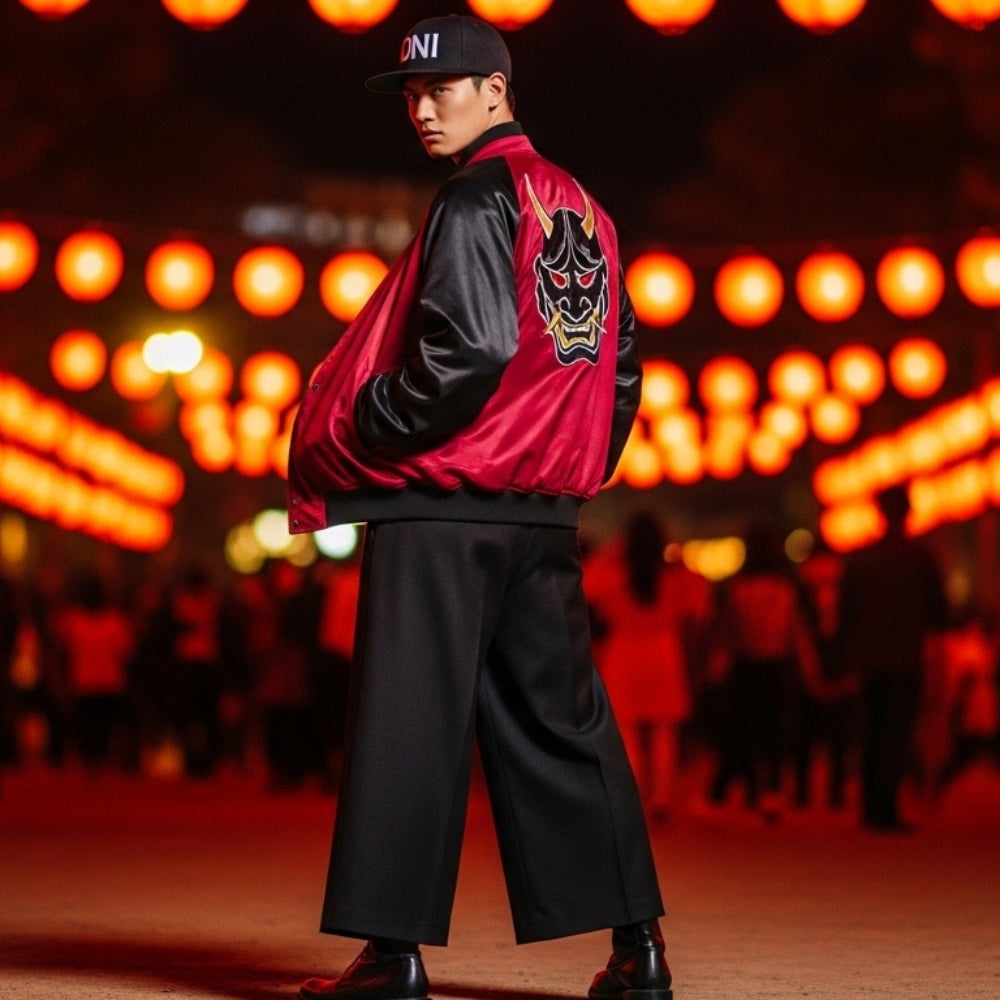
How to spot a real one.
Not every jacket sold as a “sukajan” is made like one. Use this table and the checklist before you buy.
| Detail | Well made | Warning sign |
|---|---|---|
| Embroidery | Dense, raised, with clear edges | Flat, thin, or printed look |
| Reverse side | Tidy threads, stabilizer neatly trimmed | Loose threads, tangled backing |
| Fabric | Smooth satin with weight and sheen | Thin polyester that wrinkles |
| Lining | Quilted or satin, stitched cleanly | Paper-thin or missing |
| Trim | Ribbed knit that snaps back | Loose, baggy cuffs |
| Zipper | Quality metal or heavy zip, smooth | Catches and feels light |
| Seller | Explains how it was made | No details, stock photos only |
Why people love them.
A sukajan is more than a jacket. Here is why it keeps finding new owners.
Craftsmanship
Generations of cultural knowledge sit behind every dragon. You can see and feel the work.
A story
Each motif carries a meaning. Your jacket says something about you without a logo.
One of a kind
Small-batch pieces mean you rarely see yourself coming down the street.
Easy to wear
The bomber shape works over a tee or a hoodie and goes with denim, cargo or tailoring.
Built to last
Dense stitching ages well, and with care a good jacket stays in the wardrobe for years.
Great gift
A jacket with a story behind it makes a keepsake for birthdays, teams and milestones.
Made for everyone who wants to stand out.
There is no “type” of person who wears a sukajan. These are a few of the people we make them for.
Streetwear fans
Layer it over a hoodie with wide denim and sneakers. The back does the talking.
Try: Hoodies →Collectors
Limited editions, rare motifs and special pieces to build a wardrobe archive.
Try: Limited Editions →Women & unisex
Our jackets are unisex and come in sizes up to 4XL. Find your fit in the size guide.
Try: Size Guide →Travelers
A jacket that ties a trip to Japan, or a love of Japanese culture, to something you wear.
Try: Souvenir Jackets →Gift givers
A piece with a story for someone who has everything. Ask us about sizing and delivery.
Try: Ask Us →Shops & brands
Boutiques and labels who want a Japanese-inspired line: wholesale and private label enquiries.
Try: Wholesale →
- Fit Most jackets true to size; Asian-size styles run smaller
- Weight Light satin with warm lining
- Season Spring, fall, mild winter
- Sizing help See the size guide below
Where sukajan come from, and where to wear one.
Where it began
Yokosuka, a port city south of Tokyo, and the nearby base towns where embroidery shops opened.
Where to wear it
The street, the studio, concerts, travel days and dinner. It works as a statement outer layer in most settings.
Where to buy
Vintage shops, specialty boutiques and brands like Sukajo that make new pieces to the old pattern.
How to wear a sukajan.
Five looks to start with. Pick one and make it yours.

Street
Let the back panel lead. Keep everything else relaxed.
- Hoodie or heavy tee underneath
- Wide denim or cargo pants
- Chunky sneakers
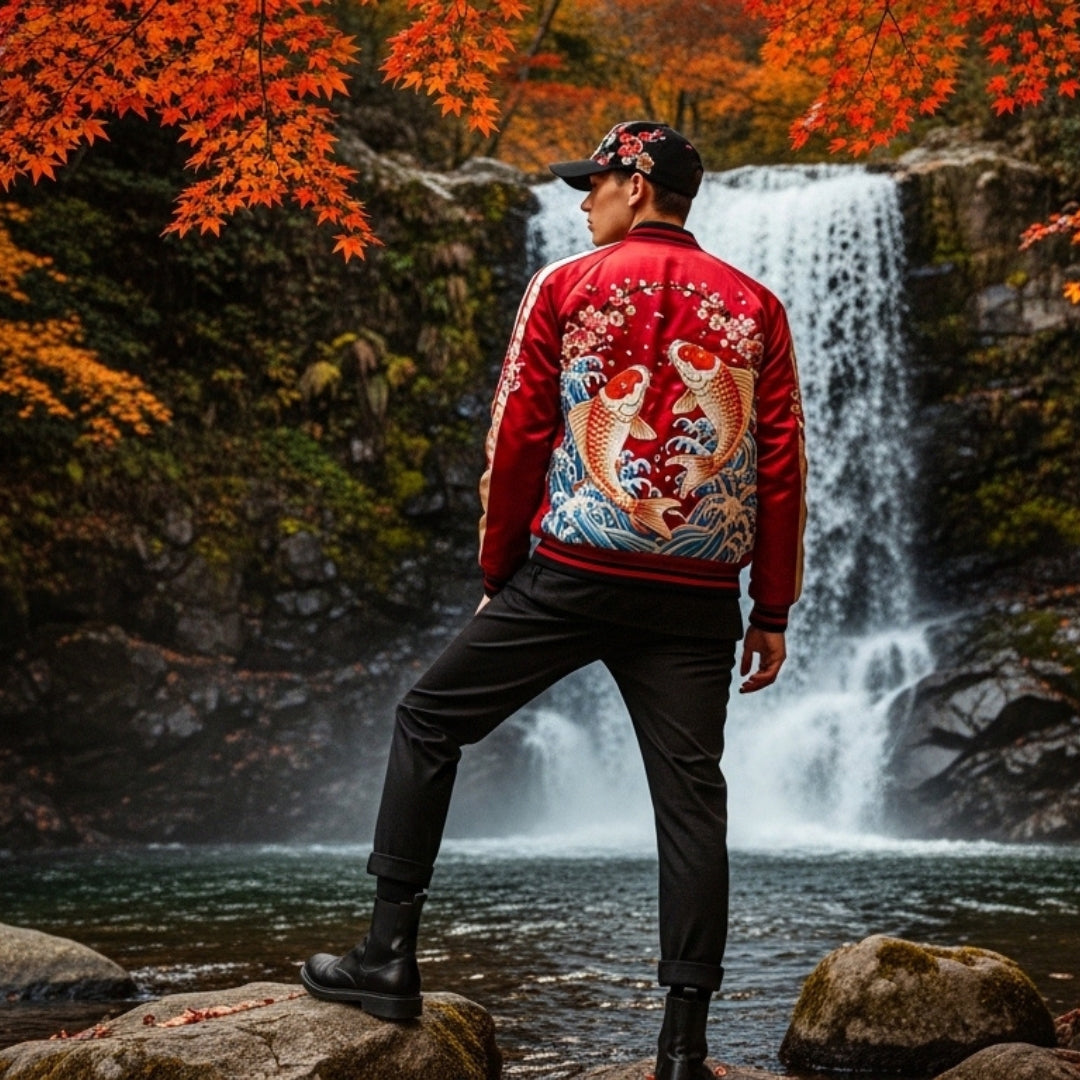
Smart casual
A sukajan can sharpen a simple outfit without a tie.
- White shirt or fine knit
- Dark tailored trousers
- Leather loafers or boots
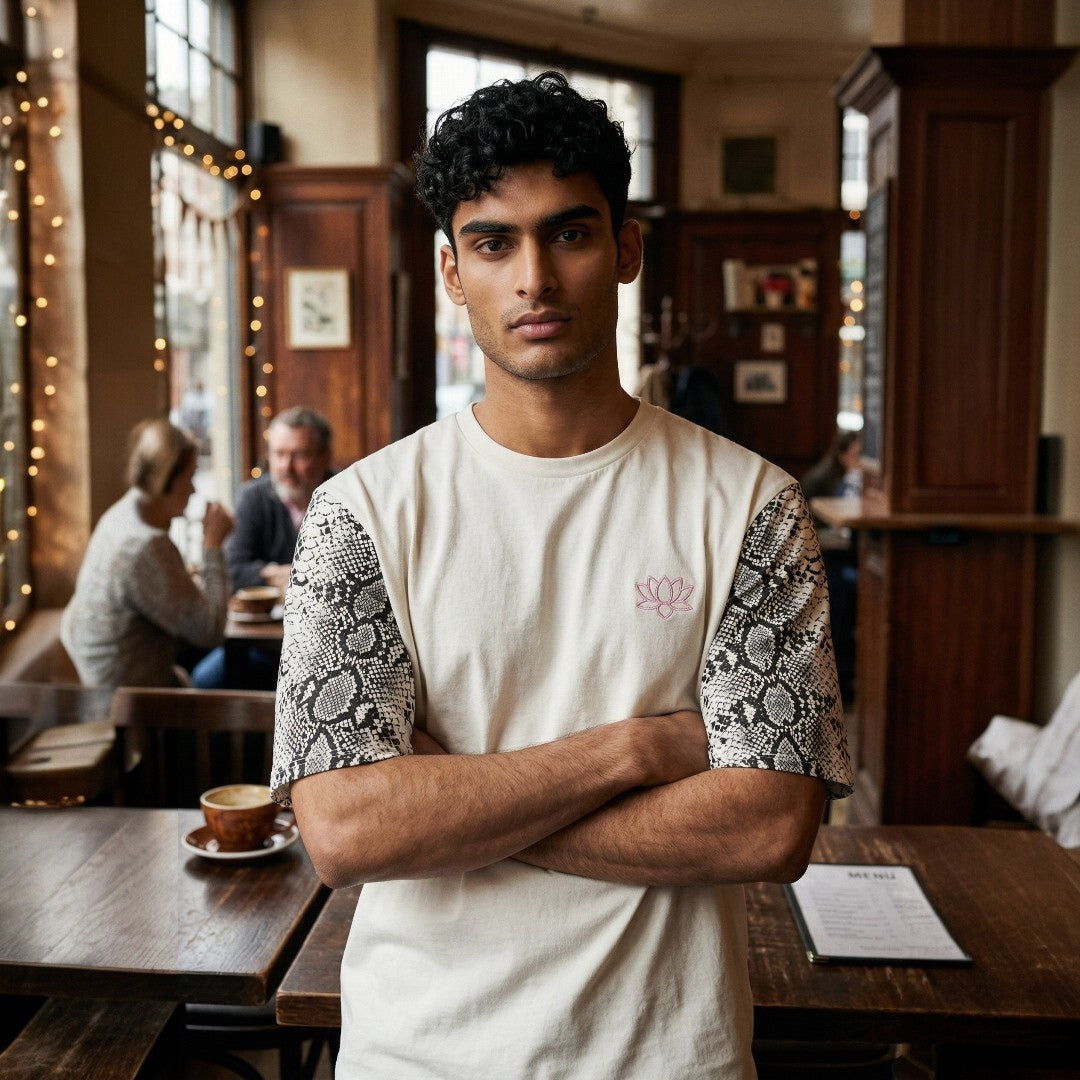
Minimal
Choose a quiet motif and let the shapes do the work.
- Plain tee in neutral tones
- Black or washed denim
- Clean white sneakers
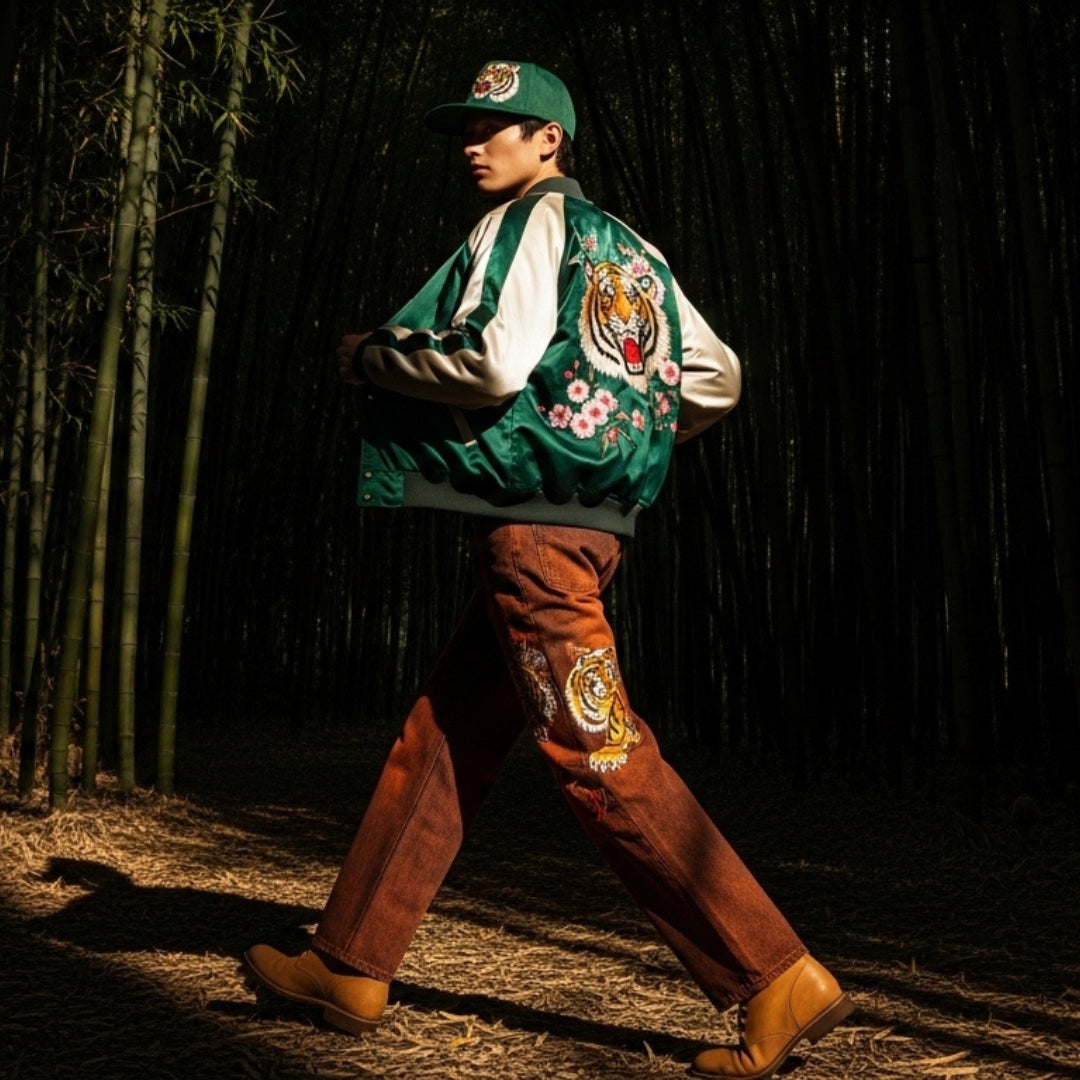
Vintage
Lean into the heritage with workwear and faded tones.
- Faded tee or henley
- Raw selvedge denim
- Work boots
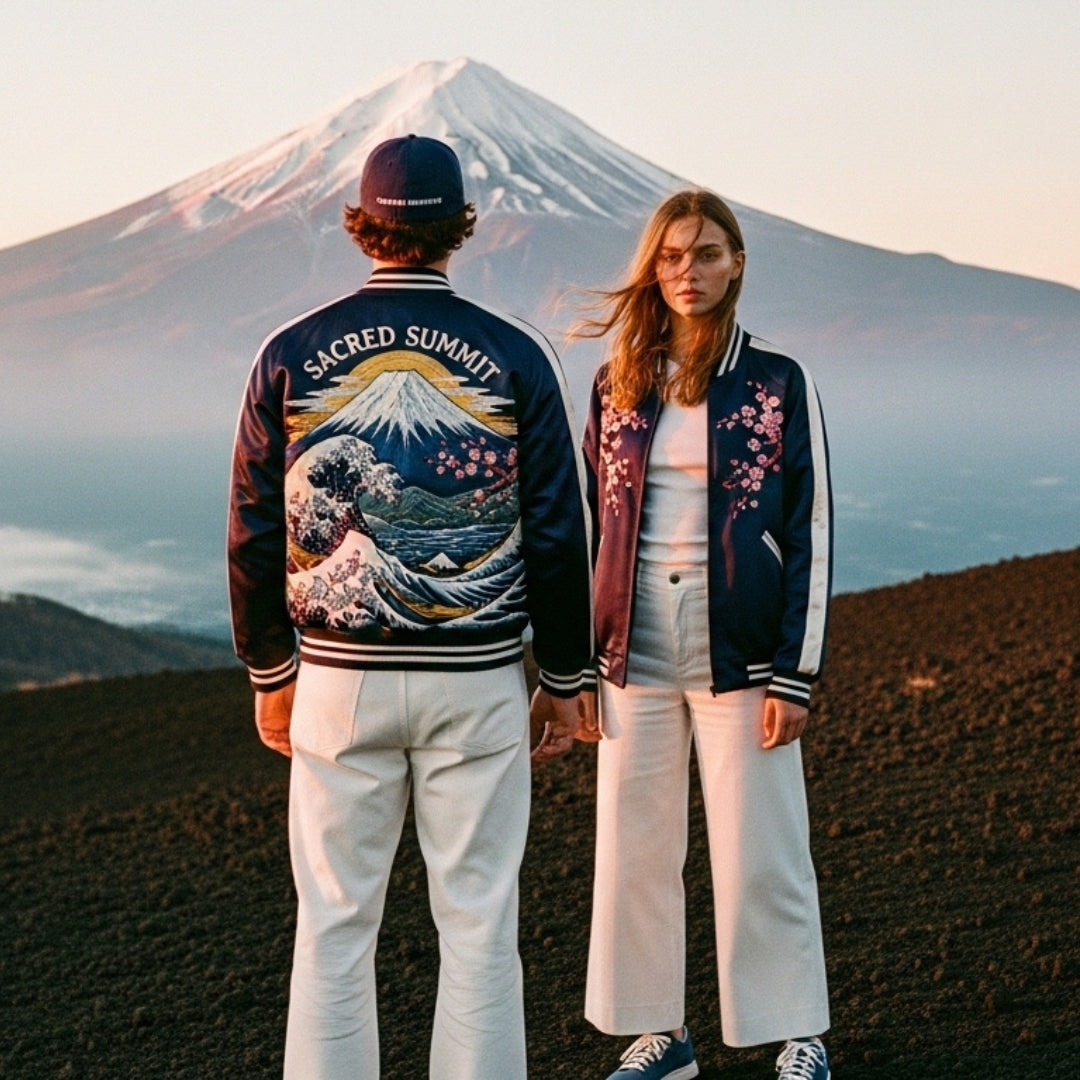
Travel
A light, packable layer that doubles as a souvenir.
- Breathable tee or shirt
- Comfortable pants
- Walking shoes
What you can do with a sukajan.
Ready to take the next step? Here are the ways to get one.
01
Shop ready-made
Browse our souvenir jackets, limited editions and Sukajo Special pieces.
Shop jackets →02
Ask for a custom piece
Tell us what you have in mind: style, colors, motif and placement.
Contact us →03
Find your size
Compare size charts for jackets, hoodies and T-shirts in inches or centimeters.
Size guide →
Sukajan vs bomber vs varsity.
They share a shape. They do not share a soul.
| Feature | Sukajan | Bomber | Varsity |
|---|---|---|---|
| Origin | Japan, post-war | Military flight jacket | American colleges |
| Material | Satin / rayon | Nylon or leather | Wool body, leather sleeves |
| Decoration | Large embroidered artwork | Usually plain or patches | Letters and chenille patches |
| Reversible | Often | Sometimes | Rarely |
| Best for | Statement piece | Everyday basic | Team and school style |
Make it last.
This is the care our jackets come with: gentle, and mostly dry clean.
| Do | Don't |
|---|---|
| ✓ Dry clean: it protects satin and embroidery | ✕ Use bleach |
| ✓ Hand wash cold, inside out, only if needed | ✕ Soak it or use direct heat |
| ✓ Treat embroidered areas gently | ✕ Rub the embroidery on rough surfaces |
| ✓ Iron the reverse side on low heat | ✕ Iron directly on the embroidery |
| ✓ Hang on a wide hanger, in a garment bag | ✕ Hang by the collar or in strong sunlight |
Questions, answered.
What does sukajan mean?
Sukajan is a contraction of “Yokosuka jumper.” “Suka” comes from Yokosuka and “jan” from “jumper,” the Japanese word for a jacket.
Is a sukajan the same as a souvenir jacket?
Yes. Sukajan is the Japanese name for the embroidered souvenir jacket, sometimes called a Japan jacket or tour jacket.
Where did sukajan originate?
In Japan after World War II, when American servicemen around Yokosuka ordered embroidered jackets from local tailors as souvenirs.
How can I tell if a sukajan is authentic?
Look for dense, raised embroidery with a clean back, a quilted or satin lining, ribbed cuffs and hem, a quality zipper and a seller who can explain how it was made. Flat printed or very thin machine embroidery is a warning sign.
Are sukajan jackets reversible?
Many classic sukajan are reversible, with embroidery on one side and a plain or contrasting satin on the other.
What are sukajan jackets made of?
Traditionally satin, rayon or silk-like fabric with embroidery thread, a quilted or padded lining and ribbed knit trim at the collar, cuffs and hem.
Who can wear a sukajan?
Anyone. Sukajan are worn by men and women of all ages, from streetwear fans to collectors.
What do the dragon and tiger mean?
In Japanese tradition the dragon is associated with wisdom and strength and the tiger with courage and protection, so they are often paired.
How do I choose my size?
Measure your chest and compare it with the size guide. Most of our jackets use a true-to-size chart; a few styles are cut to Asian sizes, which run 1 to 2 sizes smaller than EU / US sizes, and say so on their page.
How do I care for a sukajan?
Dry cleaning is recommended. If needed, hand wash cold, inside out, and never use bleach. Store it on a wide hanger and keep it away from direct sunlight.
Can I get a custom sukajan?
Yes. Tell us what you have in mind through the contact page: style, colors, motif and placement.