The Meaning Behind Koi Fish Sukajan - Strength Through Adversity
· By Hamza Ehsan
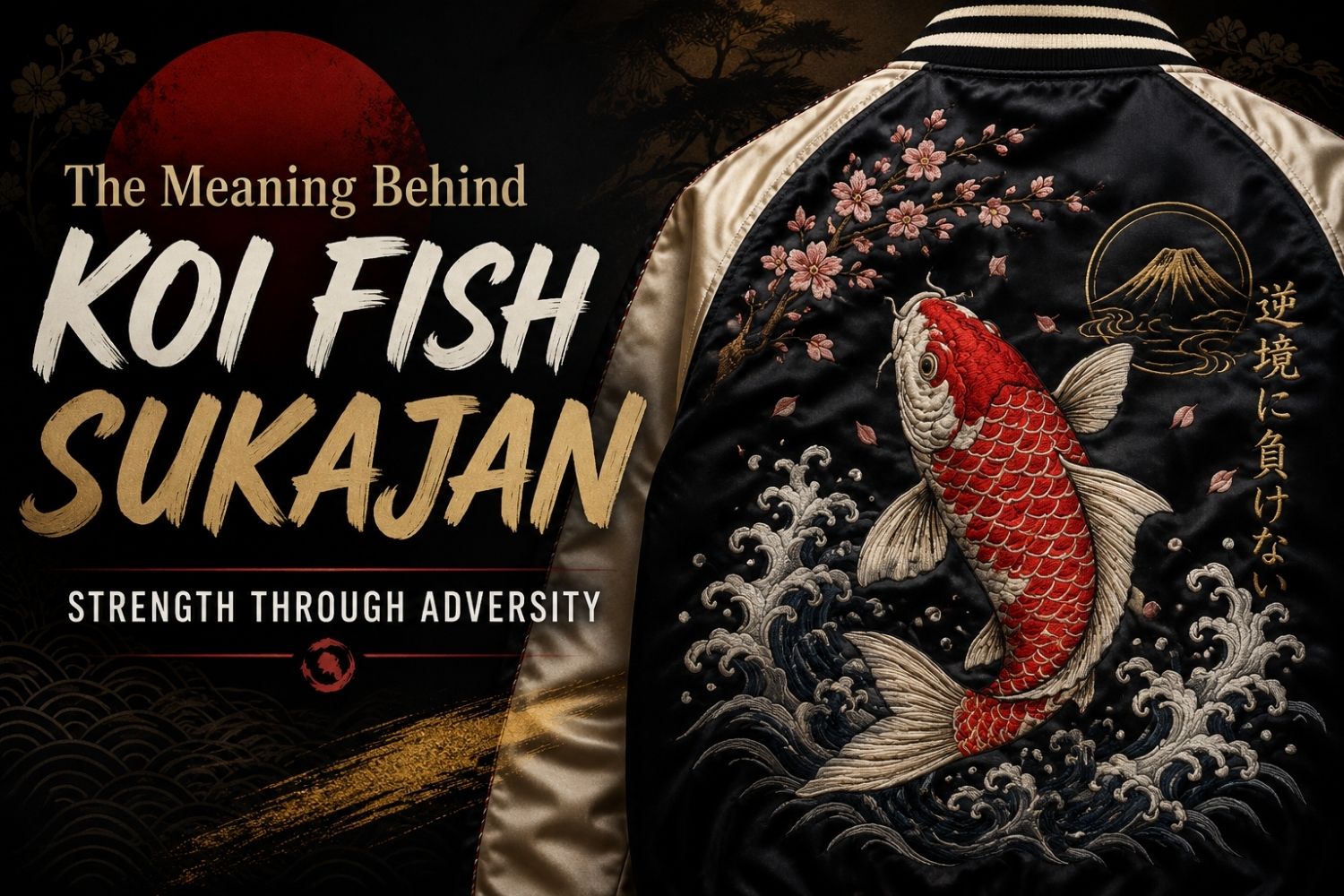
Some jackets speak before you say a word. Among the motifs stitched onto Japanese souvenir jackets, few carry as much weight as the koi fish sukajan. It isn't just a striking design choice it's a piece of wearable philosophy, shaped by centuries of Japanese folklore and still beloved today by anyone drawn to bold, meaningful streetwear. Here's where the symbol comes from, why it still resonates, and why a koi fish sukajan deserves a place in a modern wardrobe.
What Is a Sukajan Jacket?
Before getting into the koi fish itself, it helps to know the jacket that carries it. The sukajan, often called a Japanese souvenir jacket, emerged shortly after World War II, when American servicemen stationed in Japan began commissioning satin bomber jackets embroidered with Japanese imagery to bring home as keepsakes. Local artisans embraced the challenge, turning plain jackets into canvases for dragons, tigers, eagles, cherry blossoms, and koi fish. Over the decades, the sukajan grew from a military souvenir into a recognized emblem of Japanese craftsmanship and streetwear culture prized for its reversible construction, rich satin fabric, and dense, hand-stitched embroidery.

What sets a sukajan apart from an ordinary bomber jacket is intention. Every motif is chosen on purpose, and every jacket is meant to say something about the person wearing it. That's exactly why the koi fish became one of the most requested and cherished designs in the entire tradition.
The Ancient Legend Behind the Koi Fish
The koi fish's story predates the sukajan jacket by centuries. According to an old Chinese legend that eventually made its way into Japanese culture, a school of koi attempted to swim upstream against the punishing current of the Yellow River. Most turned back, worn down by the force of the water. One koi refused. It pushed against the current for years, fighting through waterfalls and rapids that looked impossible to clear. Eventually, that koi reached a waterfall known as the Dragon Gate. According to legend, demons mocked the fish and raised the falls even higher to stop it but the koi kept leaping, again and again, refusing to quit. When it finally cleared the falls, the gods rewarded its persistence by transforming it into a golden dragon. This is the origin of the phrase often translated as "the carp that leaps through the dragon gate" a story about transformation earned through relentless effort, not luck.
Why the Koi Fish Represents Strength Through Adversity
This legend attached itself to Japanese art and embroidery for a simple reason: the koi fish became a living symbol of perseverance, courage, and the belief that struggle is often the price of growth. Unlike symbols built around instant power or dominance, the koi represents the process the willingness to keep swimming upstream when everything around you says to turn back.
That idea resonated deeply in a culture that prizes discipline, patience, and quiet resilience. A koi fish embroidered on a jacket isn't just decoration; it's a personal reminder. It tells the wearer and everyone who sees it that hardship isn't something to fear but something that can be turned into strength with enough determination. That's precisely why the koi fish sukajan carries so much emotional weight for the people who choose it.
The Symbolism of Koi Fish Colors
The meaning of a koi fish design can shift depending on its color, which adds a layer of personalization to any sukajan.
- Black koi are traditionally tied to overcoming adversity and pushing through obstacles a fitting choice for anyone who has come out the other side of a hard chapter.
- Red or orange koi typically symbolize strength, love, and bravery, often chosen by those who want their jacket to reflect passion and boldness.
- Blue koi are linked to calmness and masculinity, representing a steady, composed strength rather than an aggressive one.
- Gold koi designs are tied to wealth, prosperity, and good fortune, often worn as a symbol of achievement or ambition.
This range of meaning is part of why the koi fish sukajan stays so versatile. Two people can wear the exact same jacket style and carry entirely different personal meanings, simply based on the colors chosen in the embroidery.
Koi Fish and the Idea of Transformation
Beyond resilience, the koi fish is deeply tied to transformation. Just as the koi in the legend became a dragon only after years of struggle, the symbol is a reminder that growth is rarely instant it's earned through repeated effort, setbacks, and the refusal to quit despite failure. That makes the koi fish an especially meaningful choice for anyone navigating a major life transition, whether that's recovering from a hard period, chasing an ambitious goal, or simply committing to continuous self-improvement.
In Japanese art more broadly, koi are often shown swimming upward against waves, or alongside cherry blossoms and waterfalls, reinforcing that theme of movement and change. On a sukajan jacket, embroiderers use the same visual language placing the koi in dynamic, upward-facing poses that suggest momentum rather than stillness.

Why the Koi Fish Sukajan Remains a Favorite Design
Given everything the koi fish represents, it's easy to see why it continues to be one of the most requested designs in Japanese embroidery. It appeals to people who want more than aesthetics from their clothing people who want their jacket to reflect a philosophy they actually live by. The result is more than streetwear; it's a quiet, personal statement about resilience.
Craftsmanship plays a role too. A well-made koi fish sukajan relies on dense, layered embroidery to capture the fish's scales, fins, and flowing movement across satin fabric a level of detail that takes real skill. That's part of why authentic sukajan jackets are treated as collectible pieces rather than fast fashion, and why the design has moved from postwar Japan into modern global streetwear culture without losing its meaning.
How to Style a Koi Fish Sukajan
You don't need an elaborate outfit built around the jacket. The embroidery is bold enough to act as the centerpiece on its own, so simple layering usually works best a plain white or black t-shirt underneath, paired with jeans or tailored trousers, keeps the koi fish design as the visual focus. In cooler weather, the jacket layers naturally over a hoodie for a streetwear look that still respects the design's traditional roots.
Because many authentic sukajans are reversible, some wearers also like the flexibility of switching the visible design depending on the occasion saving the koi fish for moments when they want a more expressive, symbolic look.
Choosing an Authentic Koi Fish Sukajan
Not all koi fish jackets are made equal, and that matters if the symbolism is important to you. Authentic sukajan jackets rely on real, hand-guided embroidery rather than printed designs, giving them a texture, depth, and durability that printed alternatives can't match. When choosing a koi fish sukajan, pay attention to the quality of the satin, the density of the stitching, and whether the construction reflects traditional technique rather than mass-production shortcuts our guide on spotting an authentic sukajan under $200 breaks down exactly what to look for. A jacket built with genuine craftsmanship holds its shape, color, and detail for years — honoring the same spirit of endurance the koi fish itself represents. Explore the full Sukajan Koi Embroidered Bomber Jacket collection to see this craftsmanship up close.
Final Thoughts
The koi fish sukajan is far more than a striking piece of streetwear. It carries centuries of legend the story of a fish that refused to give up until it transformed into something greater. That message of strength through adversity is exactly why this motif remains a favorite in Japanese embroidery, and why it continues to inspire people who wear it today. Whether you're drawn to the history, the craftsmanship, or the personal meaning behind the symbolism, a koi fish sukajan offers a rare combination of style and substance a jacket that says something real about the person wearing it. Ready to find yours? Browse our full Koi-Fish Sukajan collection, or read the story behind Sukajan jackets to go even deeper into the tradition.