Shop All Embroidered Sukajan Japanese Bomber Jackets
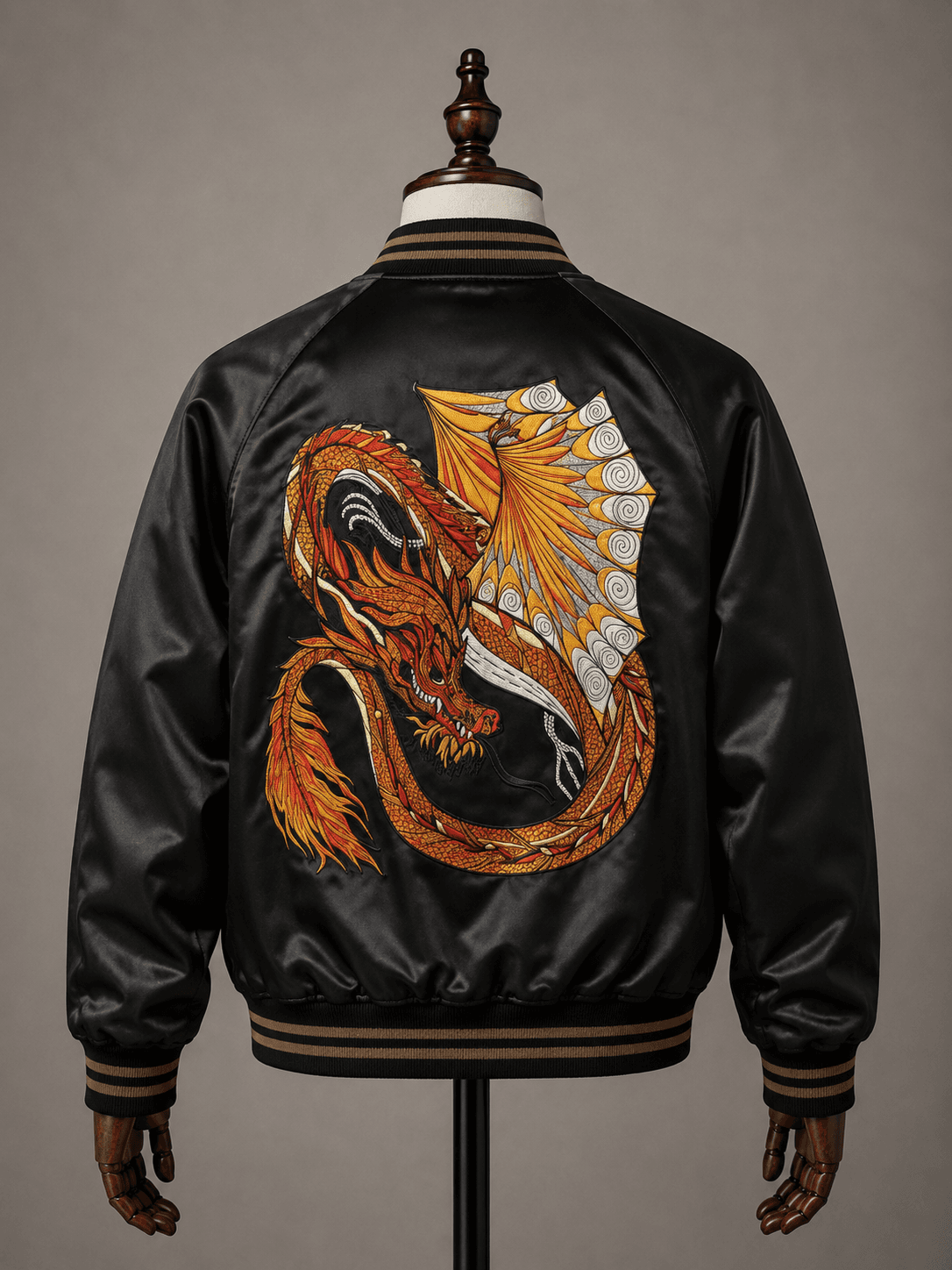
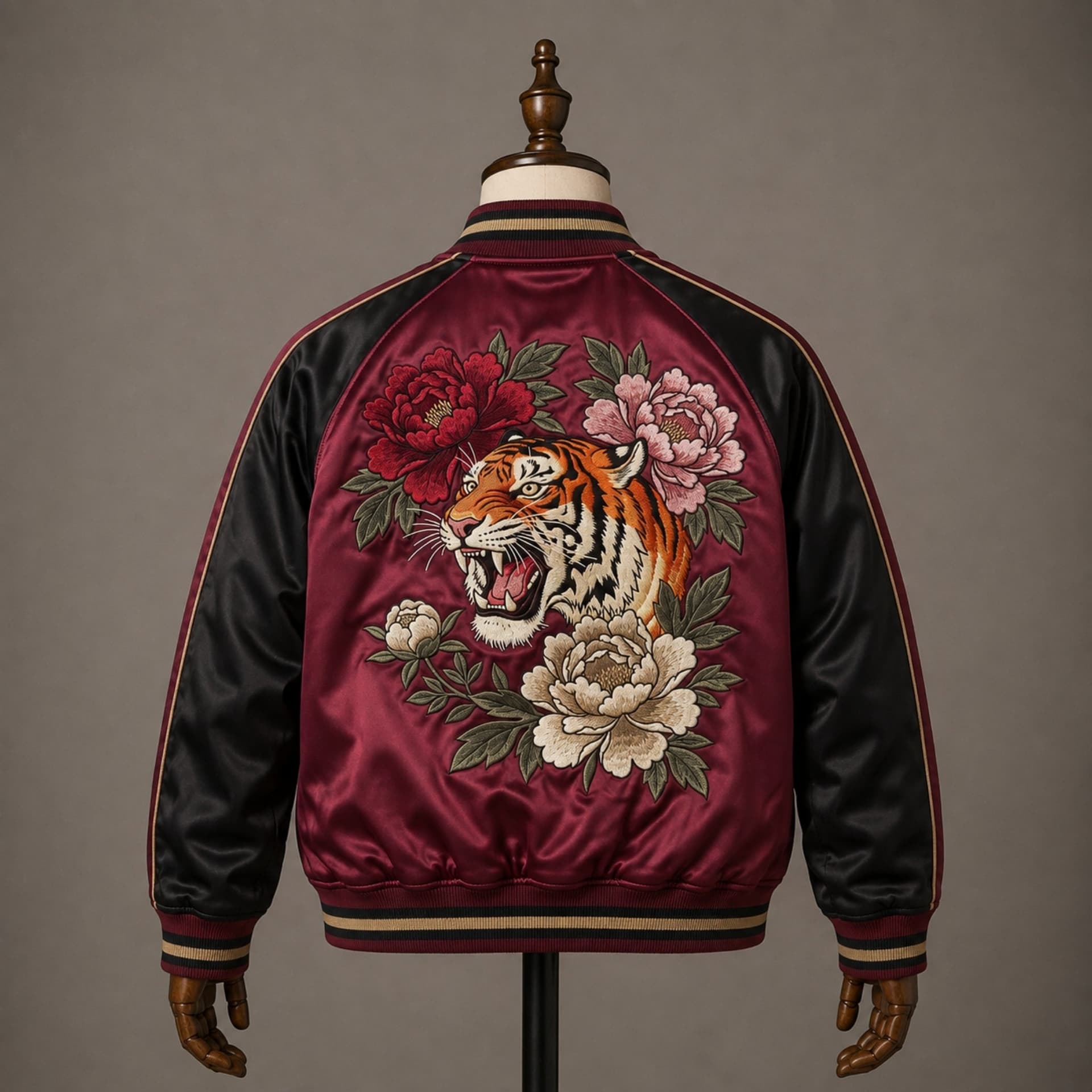
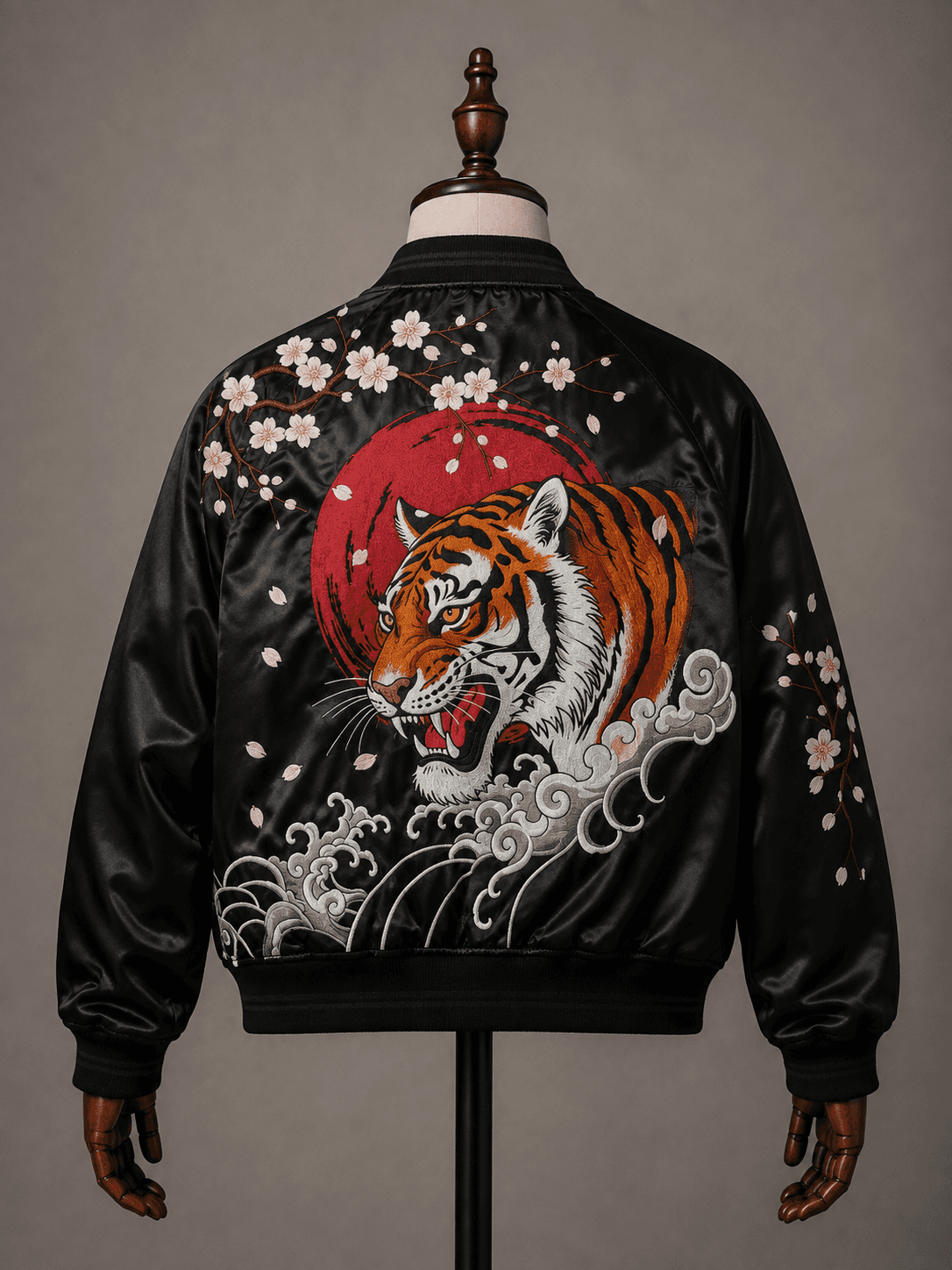
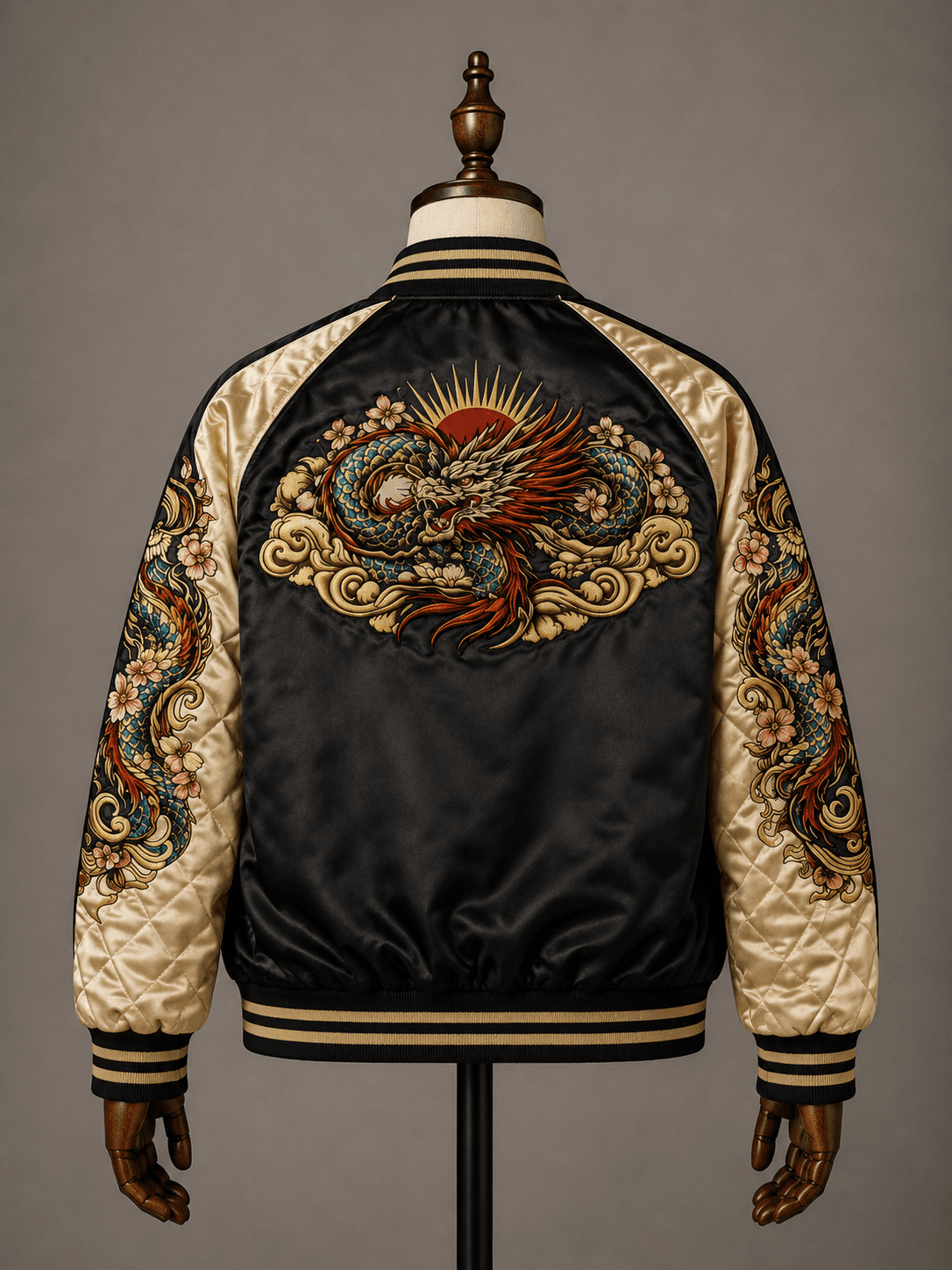
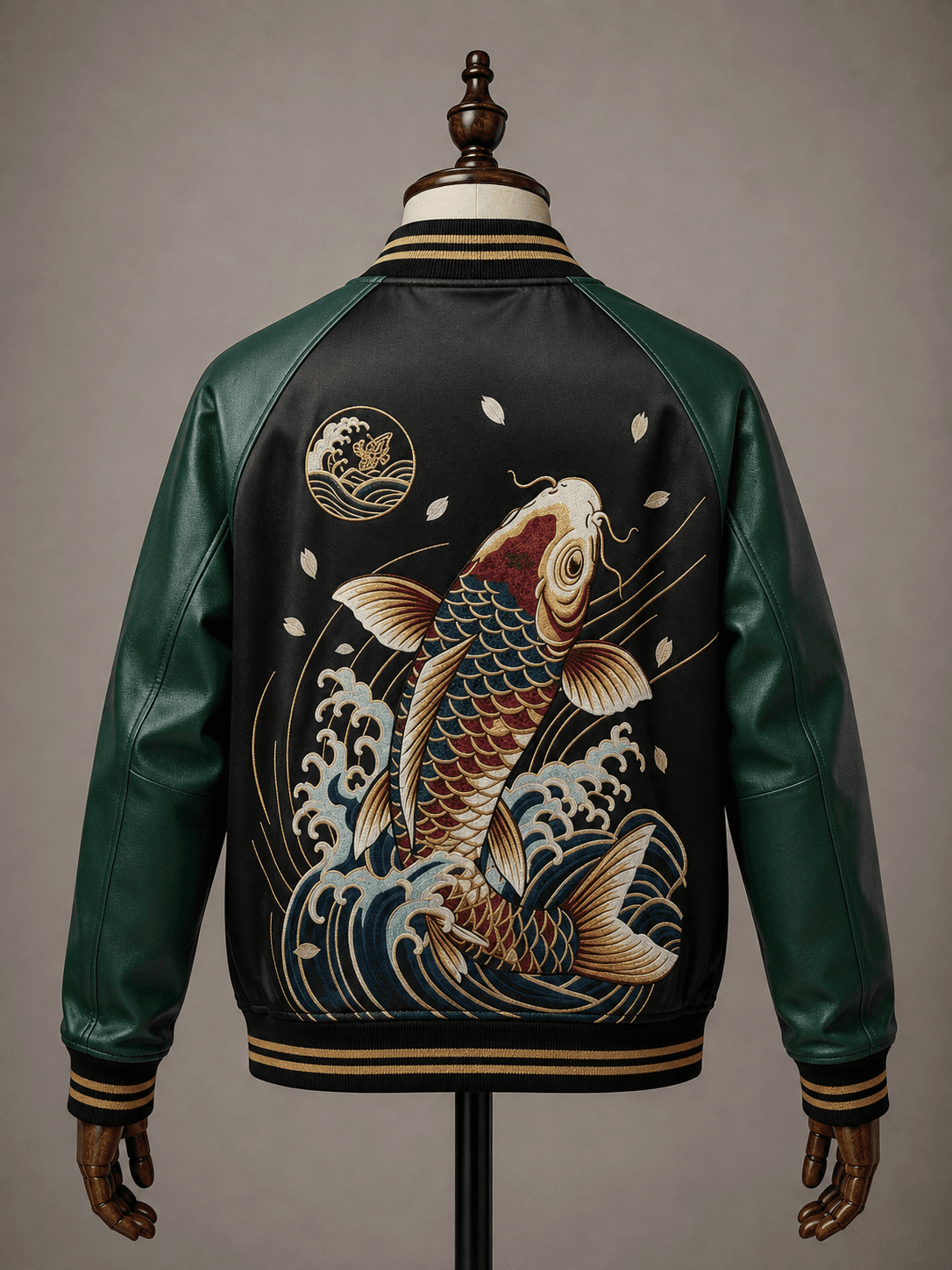
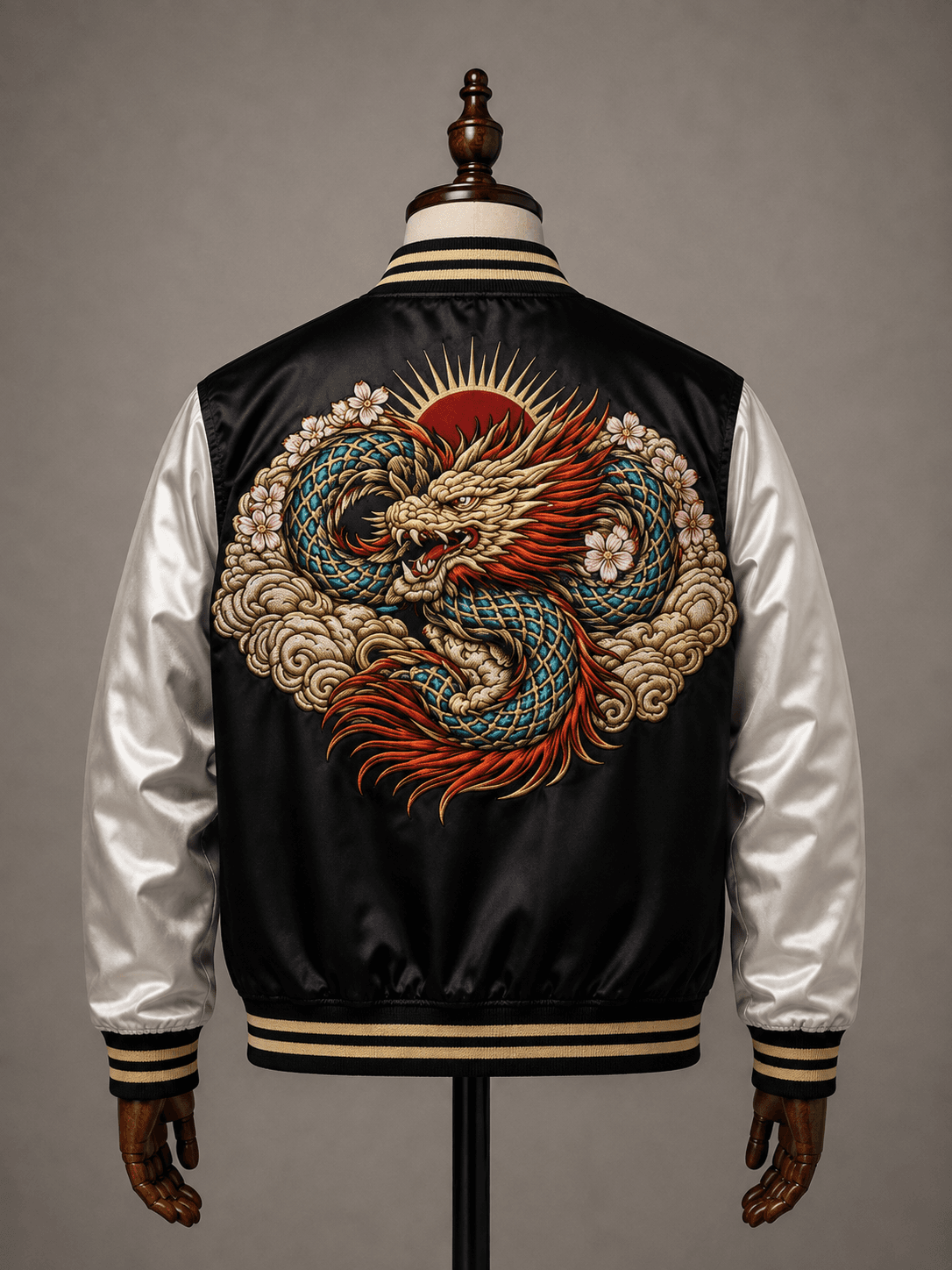
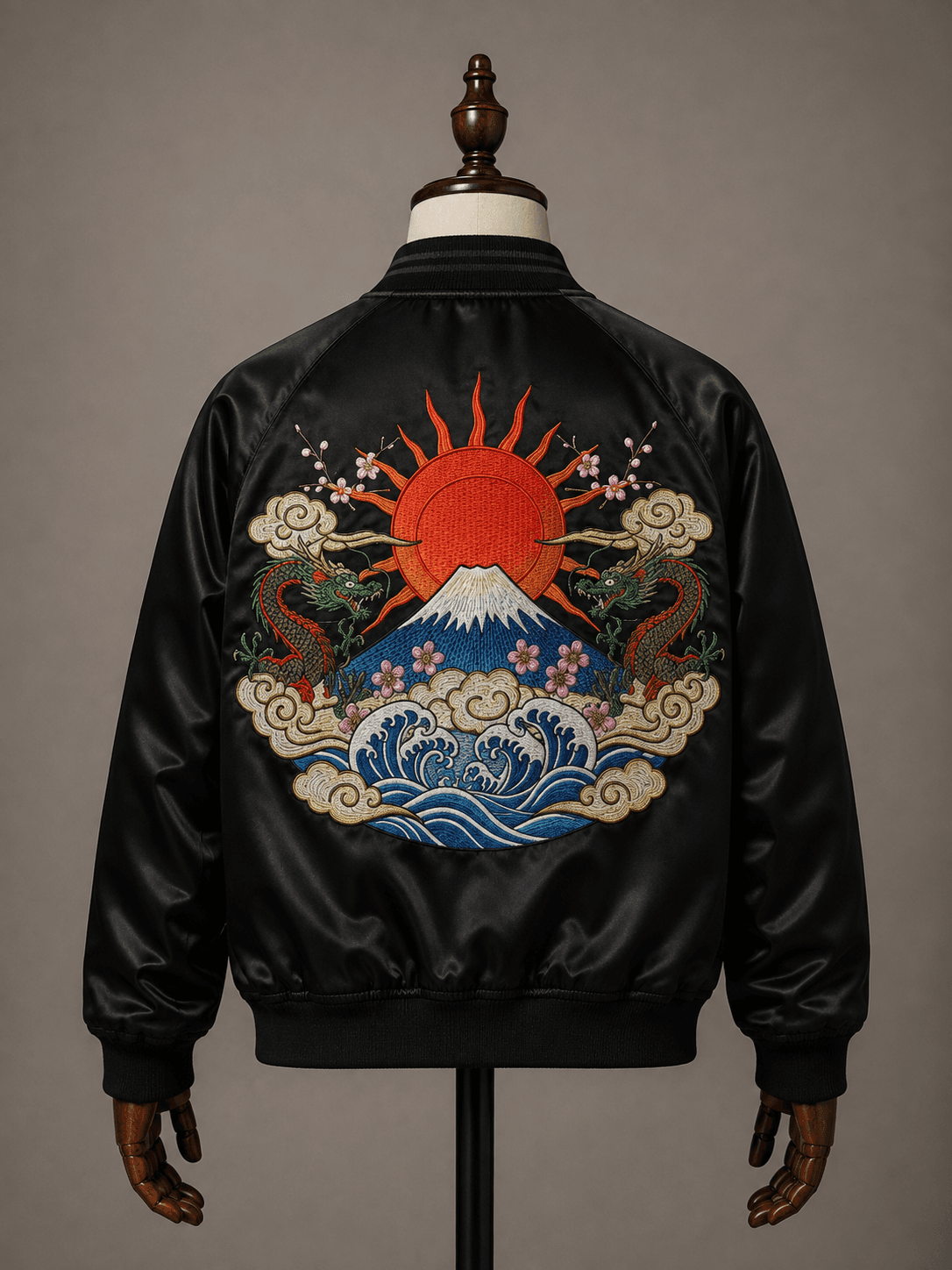
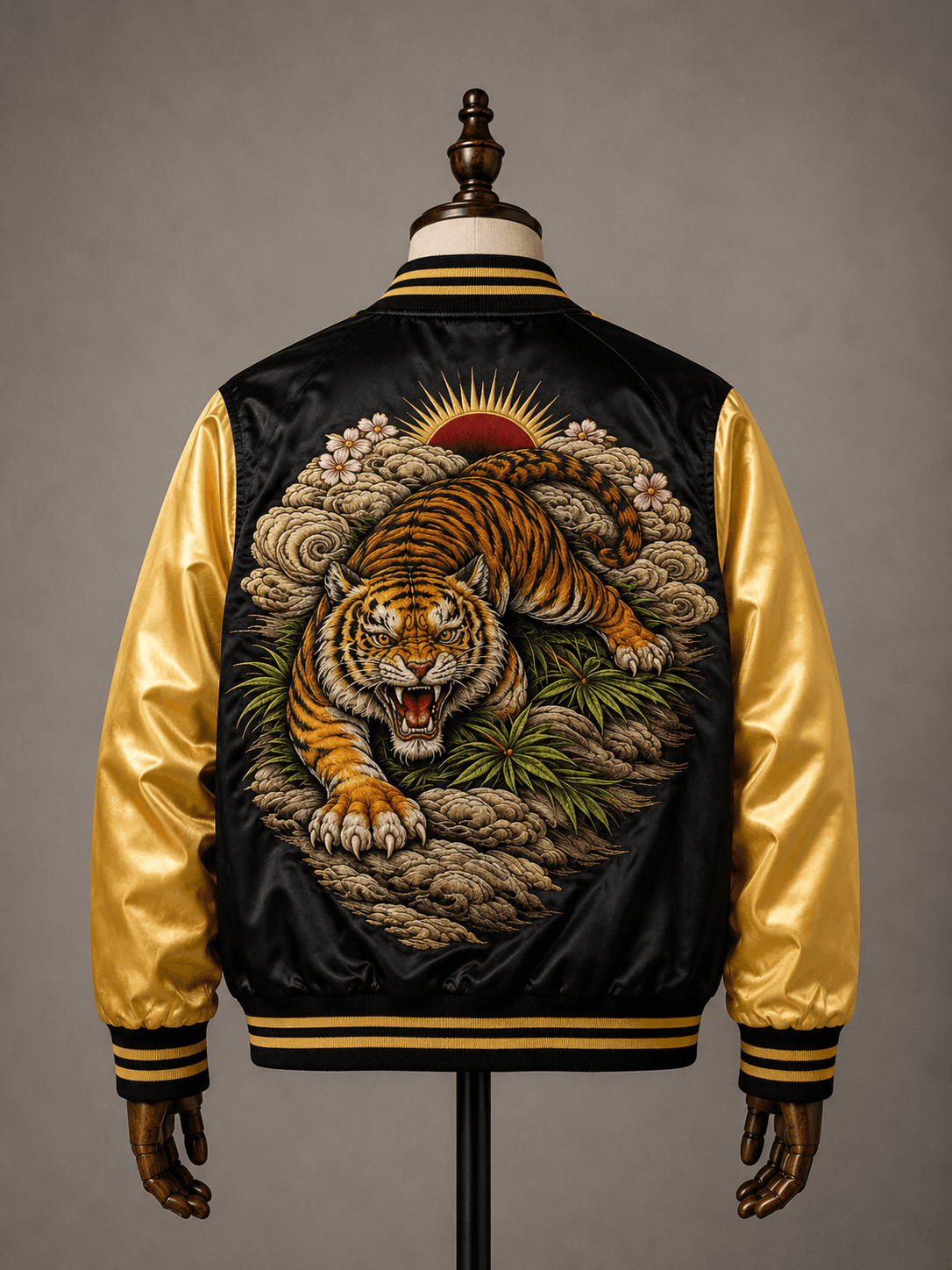
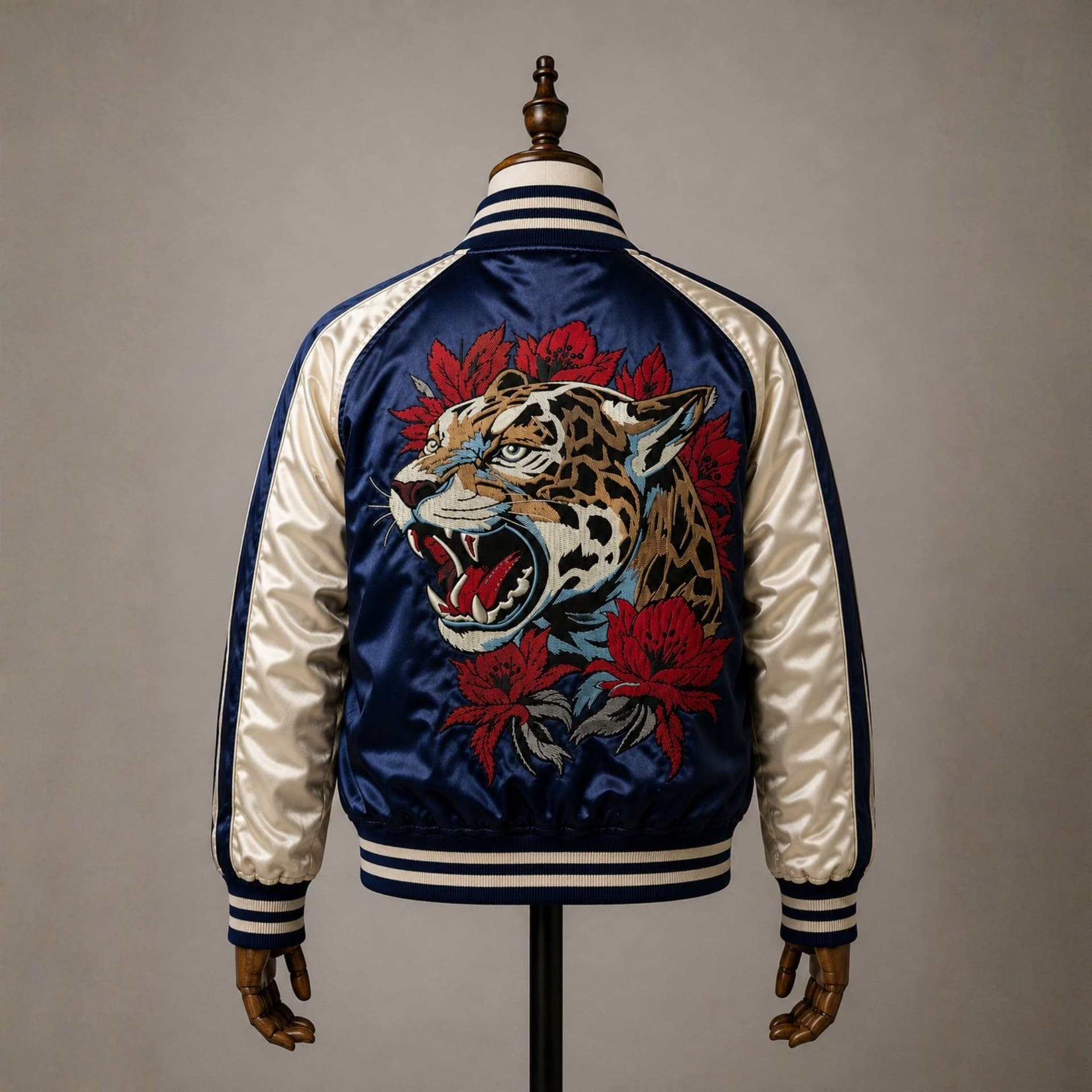
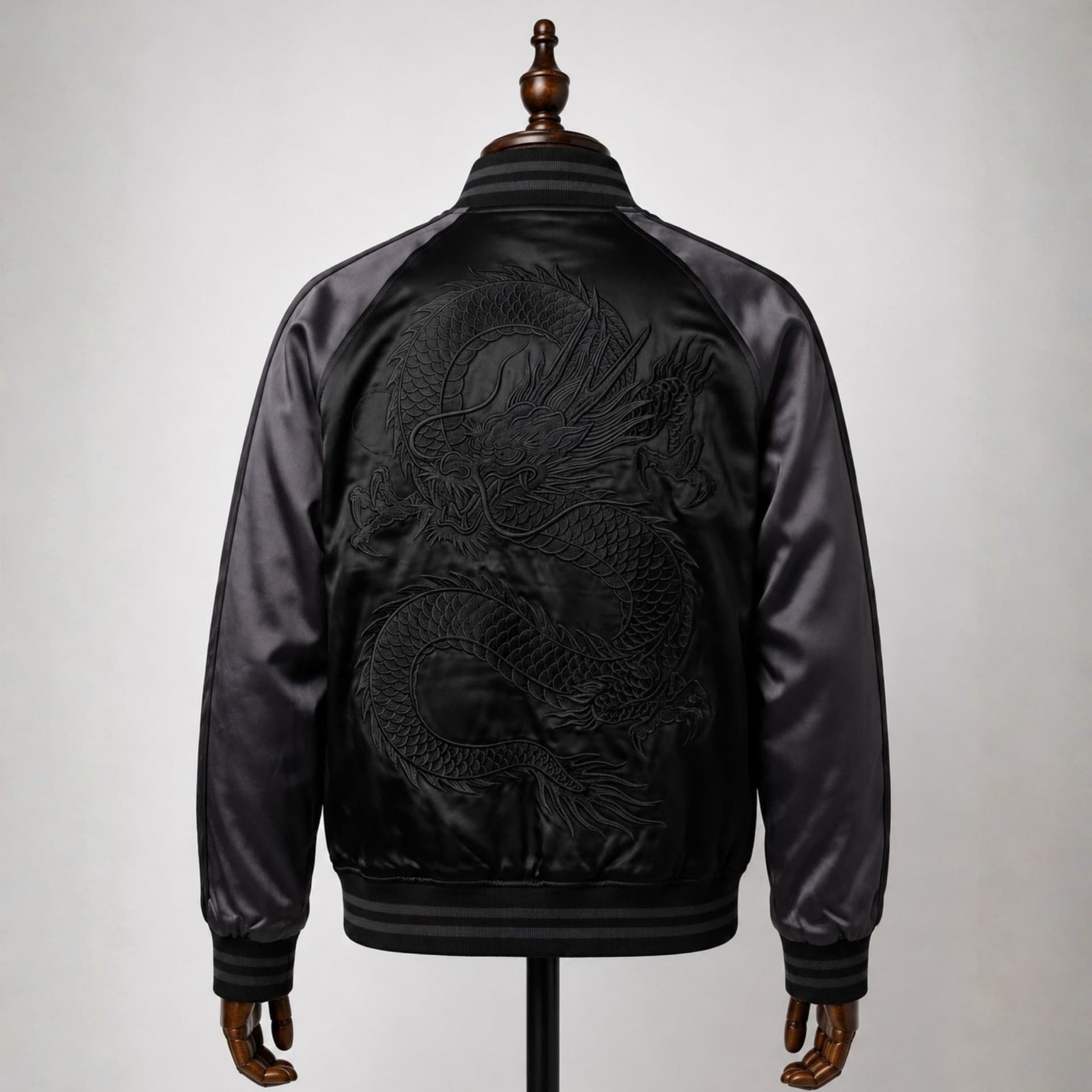
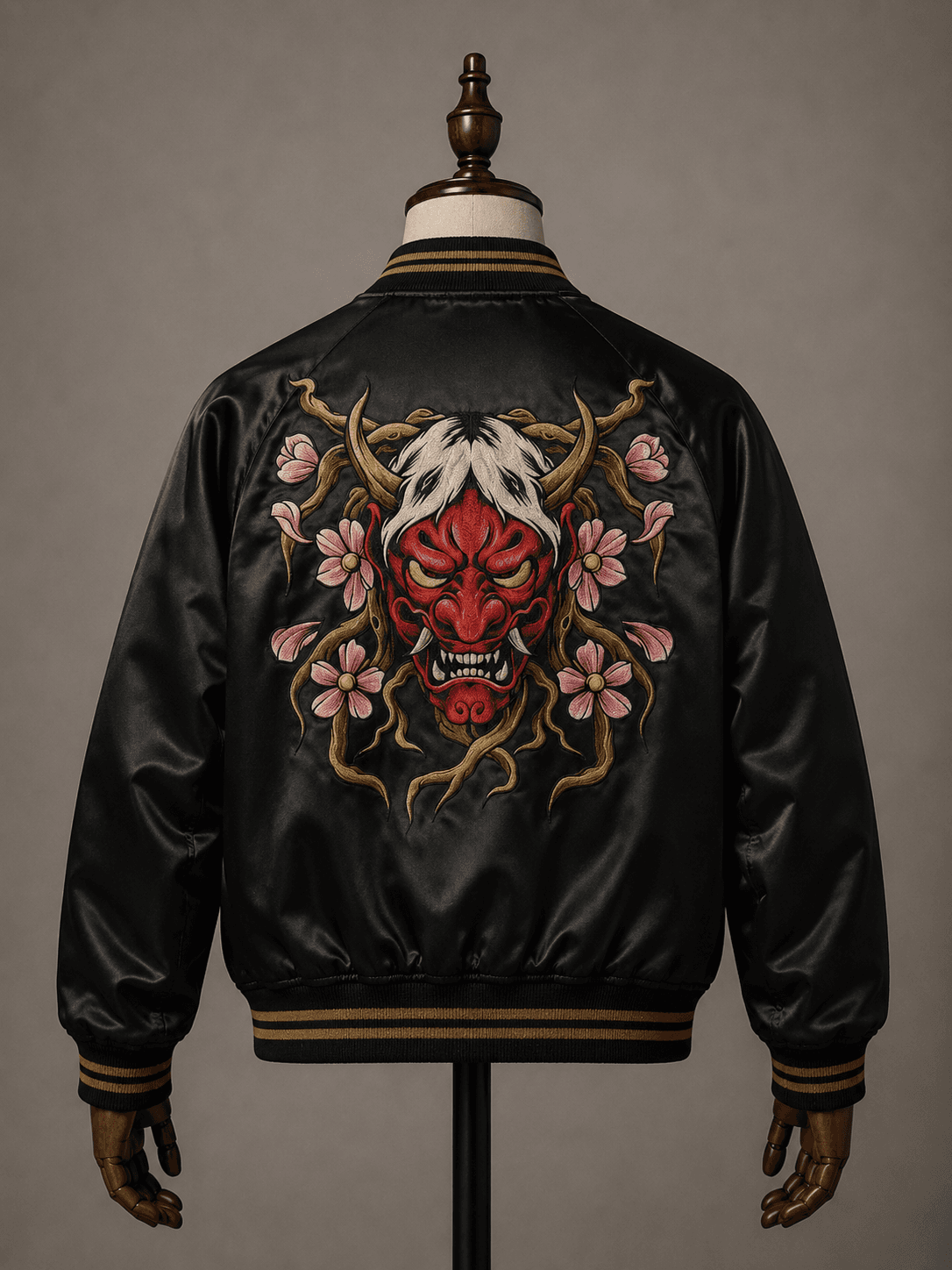
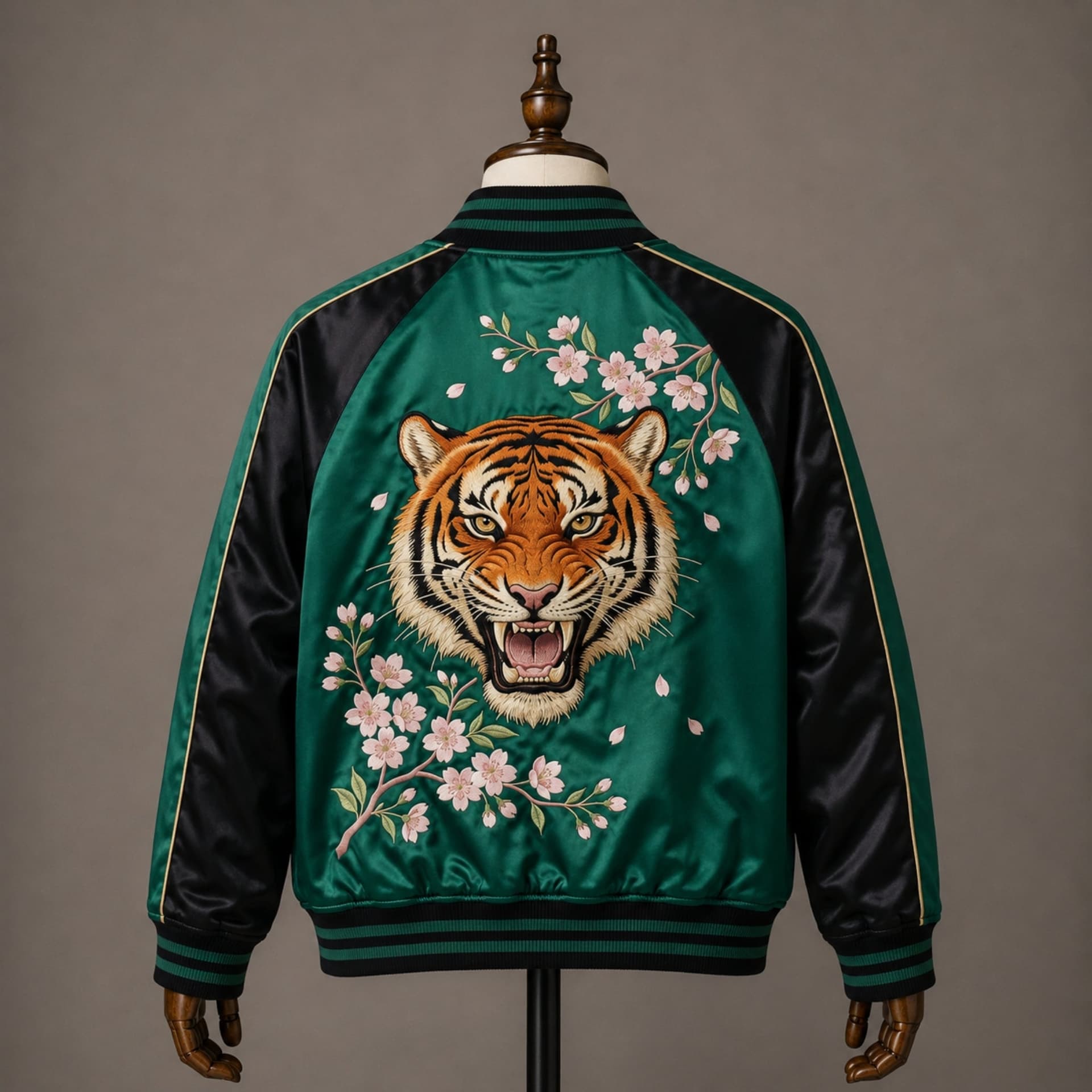
Discover the full Sukajo collection of authentic Sukajan jackets embroidered bomber jackets rooted in Japanese souvenir jacket tradition. Each piece is built on premium satin and finished with intricate stitching that brings iconic motifs like dragons, tigers, koi fish, and hannya masks to life. Whether you're after a bold statement piece or a subtler everyday layer, every jacket in this collection is designed to carry real craftsmanship and cultural meaning not just print-on-demand graphics. Browse the full range below, or jump to a specific motif using the sections underneath.
 Hand-Embroidered
Find your fit.
Find your size in the chart for your jacket, hoodie or T-shirt, in inches or centimetres. Jackets, hoodies and T-shirts are Asian sizes, which run 1 to 2 sizes smaller than EU / US sizes.
Born in Yokosuka, Worn Everywhere
After the war, Yokosuka was a port town full of American servicemen with money to spend and nowhere local to spend it on souvenirs that felt personal. Japanese tailors filled that gap with embroidered satin jackets bold, hand-stitched, built to be worn home and remembered. That's the jacket you're looking at here. We didn't invent the shape or the spirit of it; we just kept making it the way it was supposed to be made, instead of flattening it into another logo hoodie. What started as a souvenir for sailors passing through one port has ended up on shoulders everywhere Tokyo, London, Los Angeles, wherever someone wants a jacket with an actual point of view instead of a season's trend cycle. The satin base, the ribbed collar and cuffs, the oversized back panel built specifically to hold a full embroidered scene none of that has changed. If you want the fuller version of how a Yokosuka souvenir jacket became a global streetwear staple, our story covers it in more depth than a collection page has room for.
What has changed is what shows up on the back. Where sailors once picked from a handful of stock designs, our range spans traditional motifs and newer interpretations you'll find the closer-to-original pieces in our Japanese Souvenir Jacket collection, if that's specifically what you're after.

Symbols You'd Actually Have to Explain
Nothing on a Sukajan is decoration for decoration's sake. Every figure stitched onto these jackets carries weight in Japanese folklore and art, and it's worth knowing what you're actually wearing.
Dragons show up more than anything else in this collection, and for good reason in Japanese tradition they're tied to strength, wisdom, and control over the elements, particularly water.
Tigers carry a different kind of charge courage, and the will to face things down rather than avoid them. Paired with cherry blossoms, as several of our tiger designs are, you get a deliberate contrast: ferocity next to fragility, the same tension the original tailors were chasing when they combined a fierce animal with delicate florals on one jacket.
Koi fish are about persistence. The folk story behind them a koi swimming upstream against a waterfall until it transforms into a dragon is where the symbol of ambition and perseverance comes from, and it's why koi appear so often in pieces meant to mark an achievement or a turning point.
If a specific symbol is why you're here, our motif-specific pages go deeper than we can in a paragraph each start with Sukajo Motifs for the fuller breakdown, or head to Limited Editions for the designs where we've pushed a symbol somewhere the traditional canon wouldn't.
Not a Print. Not a Patch. Embroidery.
Here's the difference that actually matters, and the one most competitors would rather you not look too closely at: a printed jacket is a design applied to fabric. An embroidered jacket is a design built into fabric, thread by thread, panel by panel. One fades, cracks, and peels with wear. The other gets more character with wear.
Every back panel in this collection is dense multi-thread embroidery on a satin base — the same construction method that made the original Yokosuka jackets durable enough to survive decades in someone's closet and still get worn. That density is also why these designs hold color and shape after repeated wear in a way a printed graphic never will; there's no top layer to crack off, because the design is the fabric at that point.
It's also why fit and care are different from a regular bomber. The classic Sukajan silhouette runs slightly relaxed through the shoulders and body room to layer a hoodie or tee underneath without it looking bulky, tailored enough to still hold its shape on its own.
If you want to see the embroidery difference up close before you commit, our Sukajo Special line is where the stitch density and detail go furthest it's worth a look even if you end up back here for something more understated.

FREQUENTLY ASKED QUESTIONS
Why do these cost more than a regular bomber jacket?
A regular bomber is stitched together and, if it has a graphic, that graphic is printed on afterward. A Sukajan's back panel alone can take hours of embroidery work across multiple thread colors. You're paying for labor and material density that a printed jacket skips entirely, not a markup on the same construction.
Is this actually traditional, or just "inspired by"?
The construction, including the satin body, ribbed collar and cuffs, and embroidered back panel, follows the original Yokosuka souvenir jacket format directly. Some designs stay close to traditional motifs like dragons, tigers, and cherry blossoms, while others take more creative liberty while keeping the same construction and symbolism underneath. Each product page notes which is which.
Can I dress this up, or is it strictly streetwear?
Both. The satin base and structured bomber cut hold up over tailored trousers and a plain tee just as well as they do over denim. The louder the embroidery, the more it works as a statement piece, so pairing it with something simpler underneath lets the jacket do the work.
What's the deal with the embroidery symbols?
Dragons represent power, tigers represent courage, koi fish represent perseverance, and hannya masks represent something darker and more confrontational. Each symbol is rooted in Japanese folklore and art rather than used as generic decoration.
How do I not ruin this in the wash?
Spot clean where possible. Dense embroidery and satin don't hold up well under machine agitation, since the stitching can loosen and the satin can lose its finish. Dry cleaning is the safer option for jackets with a full back panel design. Check the specific product page, since fabric blends vary slightly across the range.
Missed a lot? Get the next drop first.
Sold-out motifs don't come back — but new lots drop regularly across every style. Join the list and you'll hear about new releases before they go public.
Buying guides & resources
Size Guide
Find your fit
Size charts for jackets, hoodies and T-shirts, in inches and centimetres, and what Asian sizing means.
Open The Guide →Buyer's Guide
What makes a sukajan authentic?
The history, embroidery, fabrics, construction and motifs that define a quality Japanese souvenir jacket.
Read The Guide →Design Guide
Choosing a design that matches you
How to choose a design that reflects your personal style and values.
Read The Guide →